Home → Services → Lawn Care & Renovations
Beyond mowing
Scarifying, core aeration, top dressing, fertilising and wetting agents — matched to whether you're on red Ferrosol or black cracking clay, because the same treatment on both soils fixes one and does nothing for the other.
The core principle
Two lawns twenty minutes apart can show the exact same symptom — a dry patch that won't take water — and need opposite treatments.
Up the range on the red Ferrosol — Rangeville, Middle Ridge, Highfields, Newtown — that patch is almost always hydrophobic soil. Waxy organic compounds coat the particles and repel water. A wetting agent breaks that coating. Aerating it alone achieves little.
Out west on the black cracking clay — Westbrook, Oakey, Wellcamp, Charlton — the same-looking patch is almost always compaction. The clay has sealed shut and water can't get in. Core aeration fixes that. A wetting agent does nothing.
Down in the Lockyer — Gatton, Helidon, Withcott — it's usually surface crusting on the alluvial soil, which again wants aeration rather than a surfactant.
This is why a contractor who treats every lawn the same way gets it right roughly a third of the time. We identify the soil first.
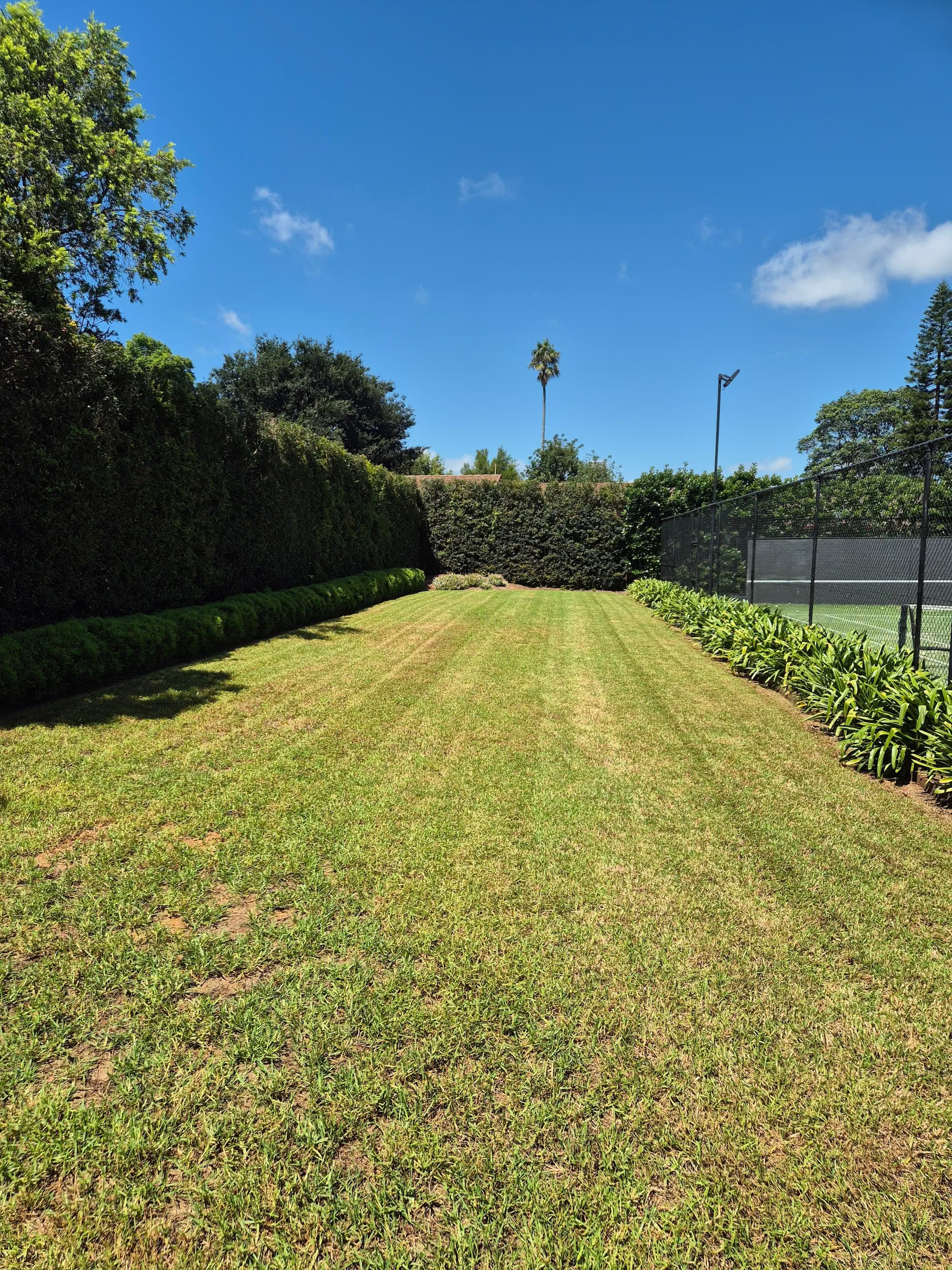
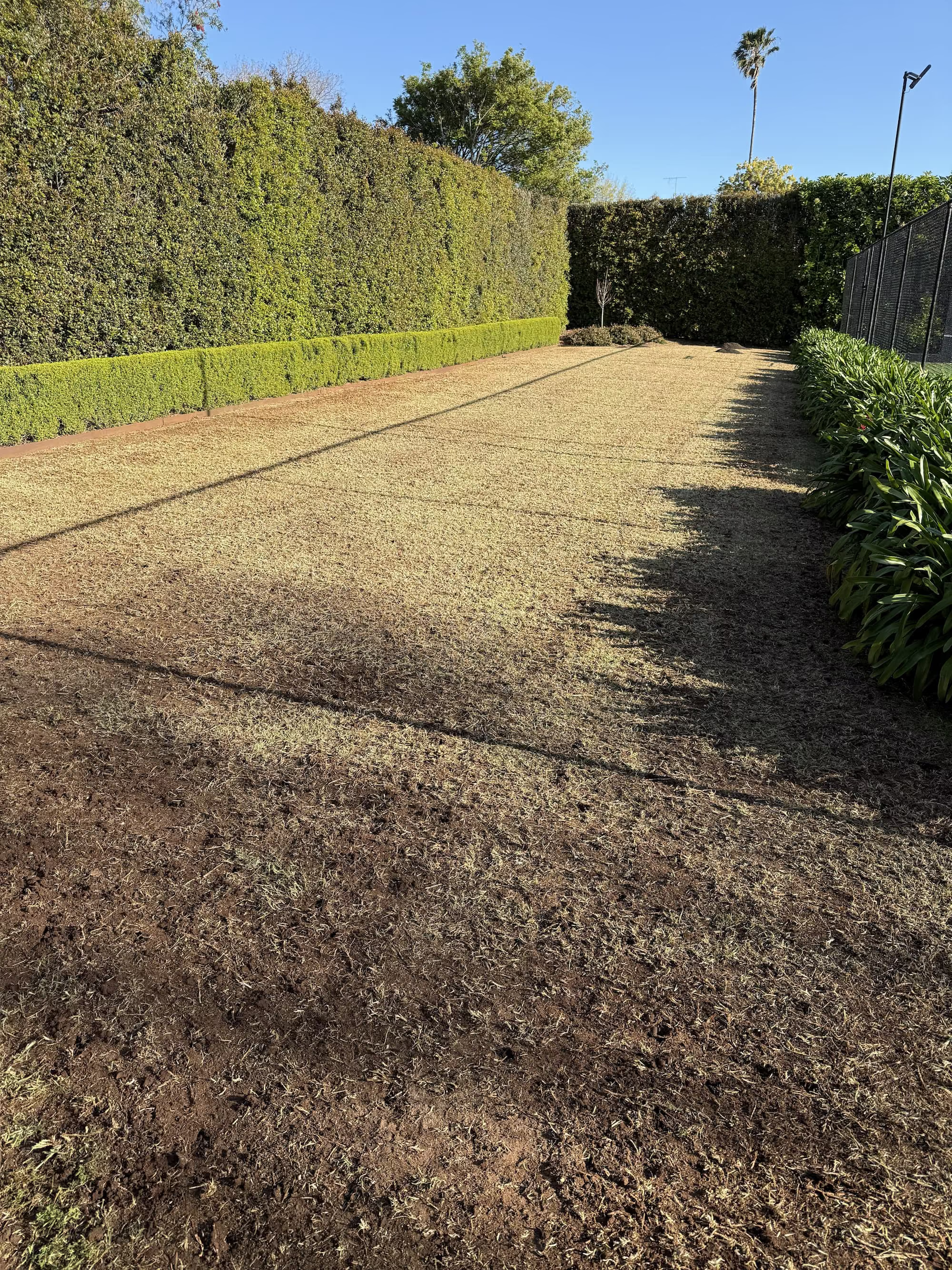
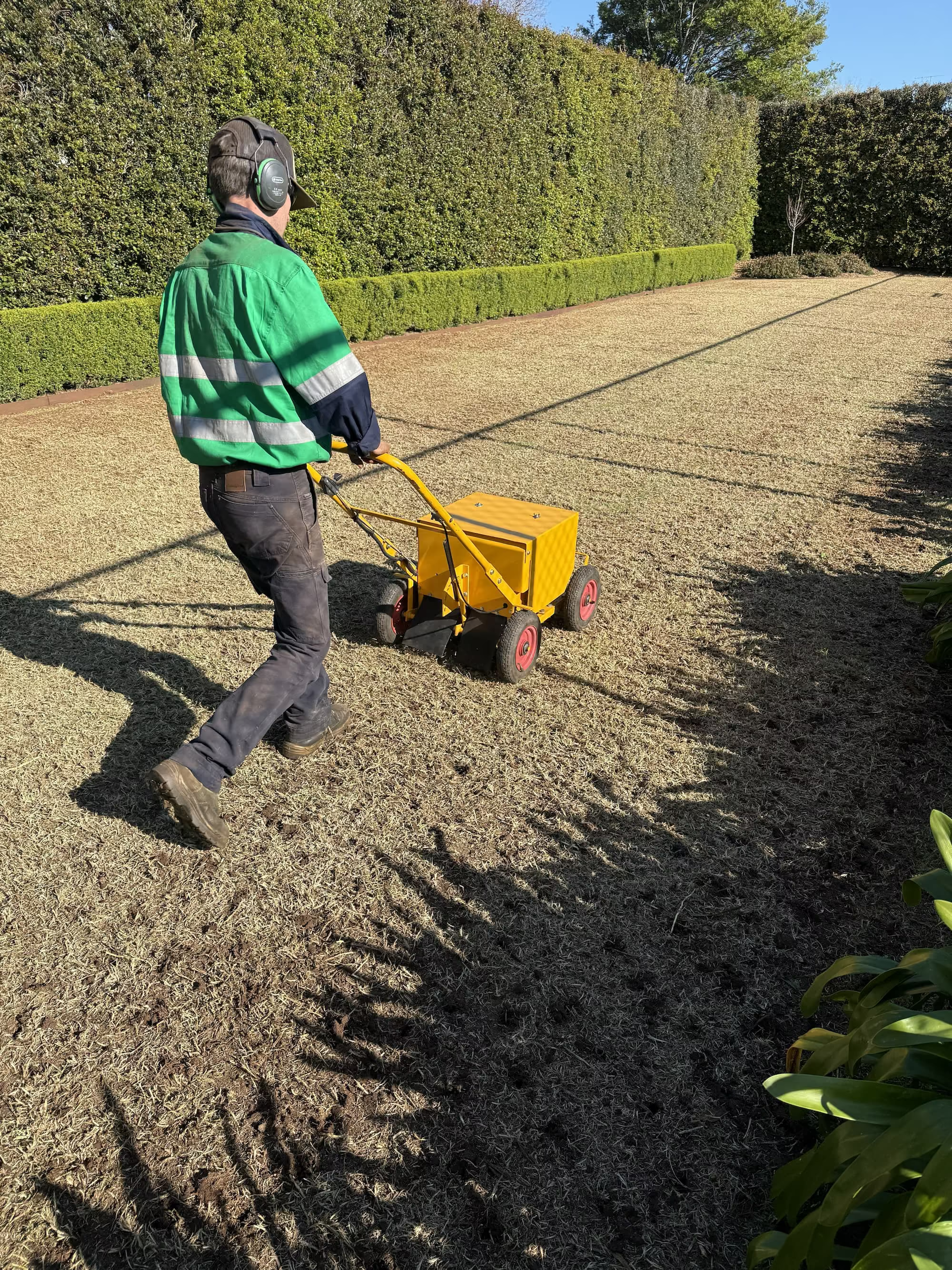
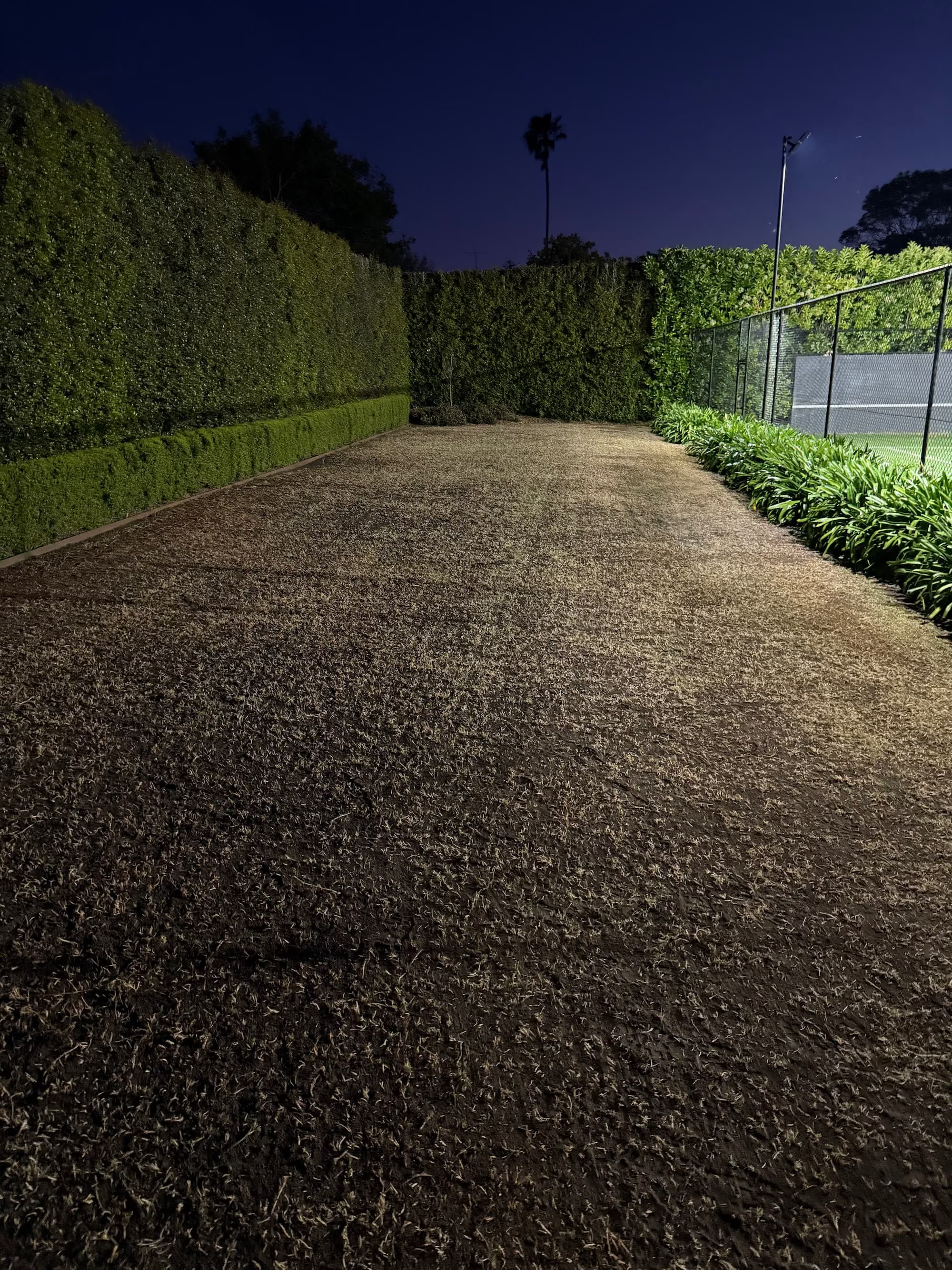
Same East Toowoomba lawn, four stages — from the tired starting point, through the renovation work, to the finished result. This is what a proper renovation does that a mow alone never will.


Pick and choose
Plenty of lawns need one or two treatments rather than all eight. We assess first and recommend only what's needed — and if your lawn doesn't need the full program, we'll say so.
The eight steps
Rebuilding a lawn from the soil up. You don't have to take all eight — but this is the full sequence, and each step depends on the one before it.
The treatments
Diagnosis
Spongy underfoot — you can feel it give as you walk. That's thatch, and it wants scarifying.
Water pooling or running off — either compaction or hydrophobicity depending on your soil. Both are fixable, but with different treatments.
Hard ground you can't push a screwdriver into — classic compaction. Aeration.
Pale, slow growth despite regular mowing — hunger. Feed it.
Clover or bindii spreading — the lawn is thin enough for weeds to colonise. Usually a feeding and thickening problem before it's a spraying problem.
Cracks opening in summer — black Vertosol doing what it does. Aeration and a higher cut height reduce it; nothing eliminates it.
Timing
The window. Warm-season grasses — couch, kikuyu, buffalo and QLD blue couch — are coming out of dormancy with a full growing season ahead to recover. Scarify, aerate, top dress and feed — the lawn repairs fast.
Aeration and wetting agents are fine. Avoid scarifying — removing leaf in peak heat stresses the lawn when it's least able to recover.
A solid second window. Aerate and feed before growth slows. Pre-emergent weed treatment now saves a fight in spring.
Warm-season grass is dormant and can't recover from renovation work. At elevation frosts make it worse. Plan now, act in spring.
If someone offers to scarify your lawn in July, that's a scheduling convenience for them rather than a decision made for your lawn.
Worth knowing
Through the peak of summer, a full scarify gets riskier — it opens the surface right when the heat is worst, and on free-draining soil that bare ground dries out fast.
But peak summer is prime time for aeration and wetting agents. These are exactly the treatments that matter most when the soil is drying, cracking or shedding water. They can go in any time and will do their best work precisely when you need them.
So if your lawn is struggling in January, don't wait for autumn. Book the aeration and wetting agent now, and plan the scarify for spring.
We'll tell you honestly if it's worth waiting a few weeks for better conditions rather than taking your money at the wrong time of year.
Why us for this work
We know the soil, suburb by suburb — free-draining red Ferrosol, black cracking clay, lighter hardsetting country, and the Lockyer alluvials to the east. Each gets treated differently.
Proper renovation equipment — a Cox scarifier and commercial-grade Powermow aerator, not a hire-shop machine and hope.
Licensed for chemical application — ACDC licensed and ChemCert accredited, so weed treatment is done safely and legally around your family and pets.
Honest assessment — if your lawn doesn't need the full program, we'll say so.
Seasonal timing built in — our scheduling system prompts treatments at the right point in the season, every season.
Police-checked, $20 million insured, family-owned, 5.0 rated with 70+ Google reviews.
Common questions
Aeration pulls plugs out of the soil to relieve compaction — it works below the surface. Scarifying cuts through the thatch layer sitting between leaf and soil — it works at the surface. Different problems, different machines. Some lawns need both, most need one.
Dig a small hole. Red-brown and crumbly is Ferrosol — most of the city and up the range. Dark grey-black, sticky when wet, rock-hard and cracked when dry is Vertosol — the western flats. Or tell us your suburb; we know which is which.
Yes, briefly. Scarifying in particular leaves a lawn looking thin and torn up for a couple of weeks. That's the treatment working. Done in spring, it fills back in thicker than before within three to four weeks.
Core aeration once a year on heavy clay, or every couple of years on free-draining red soil. Scarifying only when thatch actually builds up — usually every two to three years, not annually. Feeding twice a year, spring and autumn.
Often, yes — and more permanently than spraying. Weeds colonise thin turf. Aerate, feed and thicken the grass and the weeds lose their advantage. If the infestation is heavy we'd spray first, then renovate so the gaps fill with grass rather than more weeds.
Yes — assessment, then a staged program across the year: spring scarify and aerate, feed, wetting agents through summer, autumn aeration and pre-emergent, final feed. Priced as a program rather than ad-hoc visits.
Toowoomba and surrounds within roughly 35km — Highfields, Westbrook, Oakey, Gatton, Cambooya, Hampton and everywhere in between. See the full list of 55 suburbs on our areas page.
Not sure what your lawn needs? Book a free assessment →
Pricing
Every renovation starts with a free on-site assessment. You'll get a clear, itemised quote — and an honest opinion on what's worth doing and what isn't.
Get in touch with James
We'll look at the soil, the thatch, the compaction and the grass type, then tell you what your lawn actually needs — including if the answer is nothing yet.
Weeds are often a lawn health issue — see weed control →