September 10, 2026
October 9, 2026
Core aeration in Toowoomba: when to do it, which soil needs it, and what it actually changes
Core aeration pulls plugs of soil out of the lawn — ours go 70 mm deep — so water, air and roots can get down through compacted ground. In Toowoomba it matters most on black cracking clay, where compaction is the main problem, and least on red Ferrosol, where water-repellency is. Do it while the grass is growing, ideally between September and April, scarify first if there is thatch, top dress after, and expect $250 to $450 depending on lawn size.
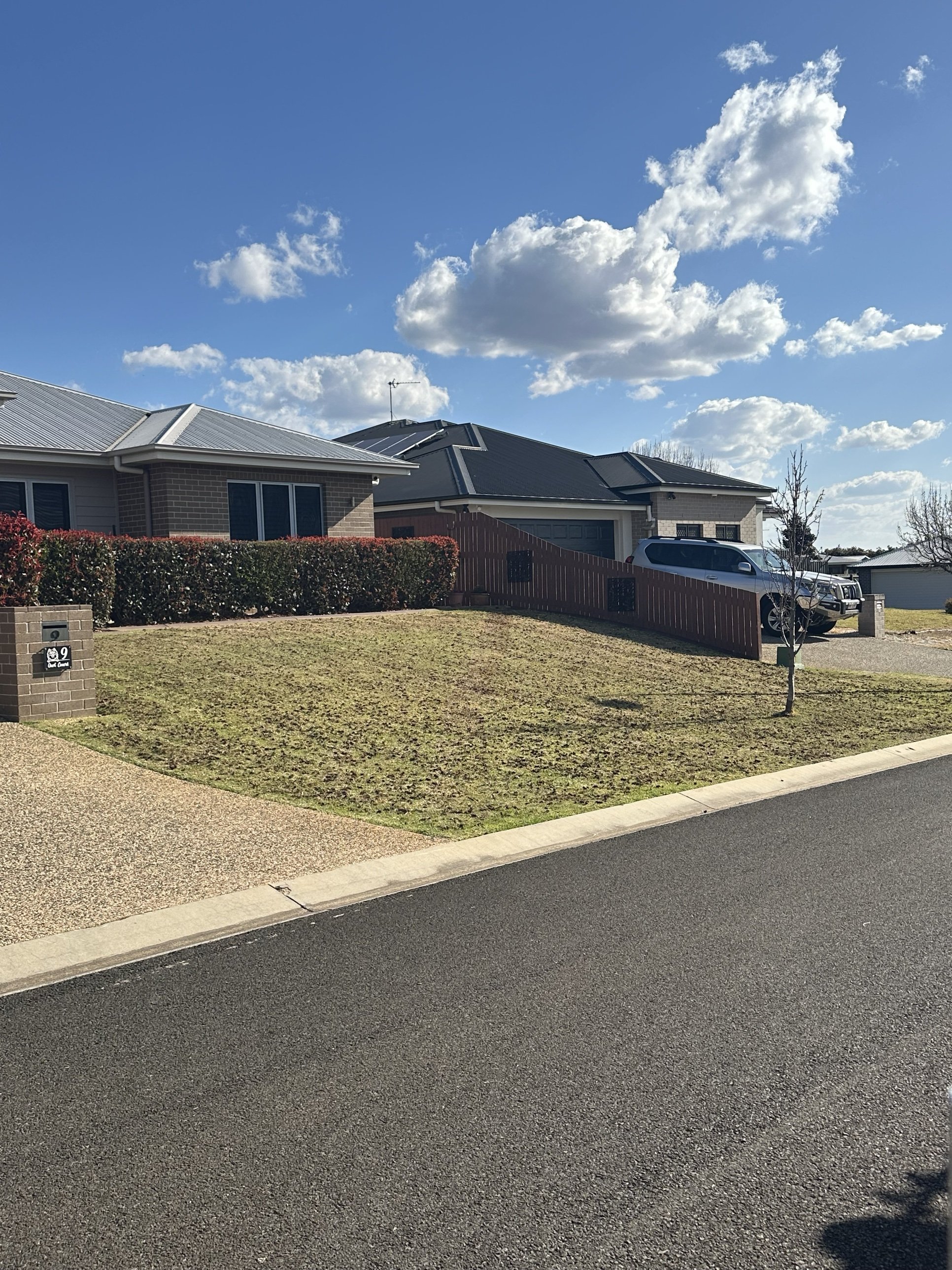
"Aeration" is one of those words that gets thrown at every lawn problem. Thin patches? Aerate. Water sitting on the surface? Aerate. Weeds? Aerate. Some of that is right, some of it is a waste of your money, and which is which depends almost entirely on what soil is under your block.
Here is what core aeration actually does, when we do it in Toowoomba, why the two soil types here want completely different things from it, and what a proper job involves.
What core aeration actually does
A core aerator pulls plugs of soil out of the ground and leaves them on the surface. Ours go 70 mm deep, well into the compacted layer where most of a lawn's working roots are.
Every plug removed leaves a hole. That hole does three things: it gives water a direct route down instead of running off, it lets air back into soil that has been squeezed shut, and it gives roots somewhere to grow into. The soil around each hole also relaxes into the space over the following weeks, which is what relieves compaction across the whole lawn rather than just at the hole.
Depth matters. A shallow plug of 25 or 30 mm only loosens the surface, and on Toowoomba clay the compaction problem sits deeper than that. Going to 70 mm is what makes the difference on a lawn that has been walked, mowed and rained on for years.
Coring versus spiking
You will see two kinds of "aerators" sold: rolling spikes, sandals with nails on them, and solid-tine machines that push a spike into the ground. None of them remove soil. They push it sideways.
On sandy soil that is harmless. On clay it is actively counterproductive. Pushing a solid spike into wet or heavy clay compacts the soil around the hole, so you end up with a glazed, harder ring where the tine went in. It feels like you have done something. You have made the problem slightly worse.
We only core. If a contractor quotes you "aeration" it is worth asking which one they mean.
Which Toowoomba soil needs it
This is the part most general lawn advice misses, because most of it is written for somewhere else.
Black cracking clay: this is where aeration earns its keep
The Vertosol on the flatter country below and west of the range — Westbrook, Wyreema, Cambooya, Kingsthorpe, Charlton, Wellcamp and the lower pockets of otherwise red suburbs — is a heavy, high-clay soil that swells shut when wet and sets hard when dry. It compacts under nothing more than foot traffic and a weekly mow.
Once it compacts, water cannot get in. It sits on the surface, runs to the lowest point and either bogs or evaporates. The roots underneath get neither water nor air. The lawn thins from the bottom up, and the thin spots are exactly where weeds get in.
Core aeration is the single most useful thing you can do on this soil. Pulling plugs out is the only practical way to open a compacted clay profile back up, and where the clay is sodic, gypsum helps it hold that structure for longer. We cover the full picture in why black soil lawns crack in summer and bog in winter.
Red Ferrosol: useful, but usually not the fix you were looking for
Most of Toowoomba proper sits on deep red basalt soil that runs up the range through Rangeville, Middle Ridge, Newtown and Highfields. It is well structured and drains freely, which means it does not compact anywhere near as readily. Where it does compact is predictable: the path to the clothesline, the dog's run along the fence, the strip where the bins get wheeled.
The red soil problem people usually have is different. When it dries hard over summer the surface turns water-repellent, so water beads and runs off exactly as it would on compacted clay. Same symptom, opposite cause. Aeration alone will not fix a hydrophobic surface; a wetting agent will. Aeration does help once the soil is absorbing again, because it gets that water down to the roots faster. We go through the test and the fix in why part of my lawn won't soak up water.
So on red soil we aerate the traffic lines and the compacted areas, and we treat the repellency separately. Coring the whole lawn every year on free-draining red soil is usually money you did not need to spend.
When to do it in Toowoomba
Aerate when the lawn is actively growing, because it needs to grow into the holes and recover. For the warm-season grasses that make up nearly every lawn here — couch, kikuyu, buffalo — September to April is the sweet spot, because the lawn knits back fast. Coring is low-disruption, so it can be done most of the year, but a dormant lawn in mid-winter is slower to recover.
Up at Highfields, Hampton and Mount Kynoch green-up runs a fortnight or more behind the city, so the spring window shifts with it. Down at Withcott and the base of the range it opens earlier.
Three conditions to avoid:
- Dormant lawn. A frost-brown lawn in July is slow to recover from coring, so spring is the better time unless you'd rather not wait.
- Waterlogged soil. Coring wet clay smears the sides of the holes and does more harm than good. Give it a few dry days after heavy rain.
- Bone-dry clay. The tines will not penetrate properly. If the ground is set hard, a deep water one or two days before makes the job work.
One more sequencing point: if your lawn is on a pre-emergent program, coring is timed around it. We lay the whole spring order out in spring lawn recovery: what to do, and in what order.
Scarify first, top dress after
Aeration on its own is fine, and we do plenty of standalone aeration visits. But on a lawn that has built up thatch — the spongy layer of dead stems and runners between the green and the soil — we will usually recommend scarifying first. Thatch over about 12 mm stops water, fertiliser and the top dressing from reaching the soil at all, and coring through it leaves you with plugs of thatch rather than plugs of soil. Dethatch, then core.
After coring we typically recommend a sandy loam top dressing. Brushed across the lawn, it fills the holes with a free-draining material that keeps those channels open long after the surrounding clay would otherwise have closed back over them. It also levels out the dips and hollows that a lawn accumulates over the years. On black clay in particular, coring without top dressing gives you a result that lasts a season; coring with it gives you one that lasts.
The plugs themselves we either rake off before dressing, or leave to break down over a week or two if we are not dressing. Leaving them is not untidy for long; the first mow or a decent rain returns them to the surface as fine soil.
A granular feed about a week later lands in open holes and goes straight to the roots. That is the best-timed fertiliser application of the year.
How often
On black clay, once a year at minimum, and twice a year on lawns with dogs, kids or a regular path worn through them. On red soil, every year or two across the traffic lines and only as needed elsewhere. If you are not sure, the test below tells you.
How to tell if your lawn needs it
- Water pools on the surface after rain or watering instead of soaking in within a minute or so.
- You cannot push a long screwdriver into moist soil past the first few centimetres without real force.
- The lawn is thin along paths, gates and fence lines but fine in the middle.
- Cracks open in summer, particularly on the flatter blocks west of the range.
- Moss or algae appear in shaded, damp corners.
If you are on red soil and water is beading off dry patches in full sun, that is repellency rather than compaction. Do the watering-can test in the hydrophobic soil article before you book anyone.
What it costs
A core aeration visit is typically $250 to $450 inc GST depending on the size of the lawn. Scarifying and top dressing are quoted separately on top of that, because whether you need them depends on the thatch and the levels on your particular lawn, and we would rather look before we price them. Every quote is free, and many can be priced from photos.
What aeration will not fix
Worth saying plainly, because it gets sold as a cure-all.
It will not fix water-repellent red soil on its own; that needs a wetting agent. It will not fix a lawn that is thin because it is in shade, or because it is the wrong grass for the spot. It will not fix a clover problem, which is a nitrogen problem — see why clover means a hungry lawn. And it will not bring a dormant winter lawn back early; only warmth does that.
What it does fix is compaction, and on Toowoomba's black clay, compaction is the thing underneath most of the other problems. Get that right in spring and a lot of the rest sorts itself out.
Want a hand with yours?
We have been looking after Toowoomba lawns since 2022, and we know which soil sits under which suburb. Tell us about your place and we will give you an honest read on what it needs — and what it does not.
Get a free quote